Showing posts with label healing. Show all posts

Monday, February 22, 2016

The Obstruction Rodeo: Two Weeks NPO

The doctor confirmed today that I have a partial obstruction of my small intestine. Luckily I am already on IV infusion treatment, and that will be extended for a few weeks and I will remain under Skilled Nursing Care at home. While I am relieved to not have to be admitted into the hospital, I am not pleased that I will be NPO for at least a couple of weeks until this obstruction resolves. [Nil per os (NPO) is a medical instruction meaning to withhold oral food and fluids from a patient for various reasons, such as a gastrointestinal obstruction. It is a Latin phrase whose usual English expansion is nothing by mouth]

Diagram of what adhesions look
like inside the intestine

I have these obstructions regularly, some do not require medical intervention but many do. In total I have had 31 that require medical intervention to resolve. They are the result of multiple abdominal surgeries which involved bowel resections and created scar tissue and adhesions. I will have these obstructions for the rest of my life. Each of these obstructions has the potential to be life ending, if the obstruction ruptures instead of resolving I will become septic and need emergency surgery to avoid death. I have known and lived with this scenario for 15 years.
TPN IV Bags - one is saline with Dextrose with
added multivitamins (yellow) The small white bag is
the Lipids or fats


 Medical technology has greatly advanced in that time. Five years ago if I experienced a major obstruction it meant I would be hospitalized for weeks on end. The non-surgical treatment is to receive all needed hydration and nutrition through an intravenous infusion, control the intense pain, and rest the gastrointestinal tract by being NPO and allow the blockage to release over time. For me surgery is only a last ditch, emergency, save my life once it ruptures option. Now this treatment can be given at home with the new portable IV pumps, and the guidance and care from skilled nursing visits. For me home is much preferable to the hospital, because of the chance for opportune infections and the extreme costs of hospital care. The only drawback to home care is that pain control is far less, but I would rather white knuckle through the pain at home than feel less in a stupor in the hospital.

You can see the size of the I bag in comparison to
the IV pump, the pump fits in your hand.
The one constant that does not ever improve is the psychological effects of being NPO for an extended time. Anyone who has had to stop all food or water before a surgery or a blood test can begin to have an idea of what that is like. Now imagine continuing that discomfort for two weeks or longer. Your mouth dries out so you have to constantly rinse and spit or swab with these yucky sponge sticks. Beyond the physical discomfort is the intense mental anguish. There have been multiple research studies on food deprivation is on par with sleep and air deprivation; meaning it will completely mess up your head in a bad way.

Like I said, this ain't my first obstruction rodeo, but it does hammer home the reality of an inevitable life changing progression of my medical condition. These obstructions will continue and my reliance on infusions for nutrition and hydration will grow until I am on what is called TPN (total parenteral nutrition), where all of my body's nutrition and hydration will be supplied through my veins directly into my blood stream, skipping my GI tract and it means living my life on NPO. The idea of one day never tasting cheese or fresh milk, or chocolate or fresh baked bread suddenly feels all too real. It makes me wonder about quality of life and what is enough.

When so much of our social constructs revolve around food, the eating of it and the sharing of it; the idea of never eating again seems like a big hit to the quality of life category. I know there are people who survive on TPN, most research though does show full dependence on TPN causes serious kidney and liver damage and the life expectancy is roughly 2 years. This is why the team of GI specialists that I work with are doing everything we can to delay the process of having to depend solely on TPN. It is hard for me to wrap my head around living without eating. And don't get me started on the financial burden that medical treatment will become, TPN is far more expensive than almost any external food sourced diet, like 5X more expensive. I have known the TPN thing was an inevitable progression for nearly a decade, it has been looming in the back ground as one of the final boxes on the check list of things that will occur in my final stages of my life. For a decade it has been the boogieman far off in the shadows, too far to really think about because it was too scary and part of the signs that the end is really approaching.

Fortunately for now I am only NPO for the next two weeks, but it certainly gives me food for thought.
The IV bag loaded into the back pack along with the Cadd IV Pump and the high volume tubing set.
The IV Pump back pack rides inside a modified suitcase housing - this
allows the whole thing to roll on four wheels. With a full IV bag, pump and
battery power pack it weighs about 50lbs.

With the suit case housing closed - it rides along like R2D2 - makes it less scary.

Thursday, November 19, 2015

Clean Up on Aisle 6: Portable IV Pumps Are Not All That Portable

Today was the first day on my monthly IV treatment, I usually have an IV line inserted into my central port in my chest for 7-10 days to give me hydration and nutrition and medications. This infusion helps keep me from having so many bowel obstructions and long hospital stays. I have been on IV treatment similar to this for 4 years now. Currently I use a CADD prism portable IV pump; that pumps continuously for 24 hours at 100 ml/per hour. Now believe me portable is a misnomer, as you are never really portable with an IV line in your body even with a tiny IV pump that rides inside a rolling bag you are seriously limited in your movement by the tubing that is connected to your body. So it is difficult to go anywhere out side the home, but we had to be at a doctor's appointment. The pump, Power pack and huge bag of Saline (which holds 2500ml is housed inside a backpack that was configured to ride in a converted R2D2 rolling carryon bag. I am very used to using the CADD pump and I started using it because it is superior in safety for me as a closed system. This pump provides a continuous flow over 24 hours with far less chance for air bubbles to occur in the line and less reason to open the line to possibility of infection. With older stationary pumps, you open the line every time you have to change to a new IV bag which with the standard 1000ml bags meant 3 opportunities for infection a day. The high volume tubing on the CADD pump allows for needle-less access in giving meds during the infusion, I no longer have to stop the pump and open the line to inject medications; again this provides less opportunity for infection. These pumps are designed to be portable, they are programed by wifi connection and the data is monitored by your doctor in real time during use from their office while the patient is at home. For most patients who have to have on going infusion treatments, infections and exposure to the bacteria in a hospital setting is extremely dangerous and being able to get treatment at home is not only safer but much less expensive. For me, the hospital is a very dangerous place to be, the infection risk is very serious, so we do as much treatment at home as possible.

Me and My CADD Prism IV pump housed inside my
converted R2D2 rolling carryon bag. We chose this
bag because it is hard sided and holds the system upright
in the best position.The ultra light 4 wheel carrier it
rides on is super strong and functions like a cane when I
need balance and support. If you have to walk around
with an IV pump it, you might as well have it look and
sound like R2D2.


I have always thought of the CADD pumps as virtually bomb proof - super safe and so easy to operate. So easy and safe that I started to forget the potential dangers of having an IV infusion entering just a few centimeters above your heart valve. The port is so simple and clean you forget how close it is to your heart. Today, I learned what a catastrophic failure in the high volume CADD cassette tubing can do to you in a very short time frame. I was nearing the end of my first 24 hours of infusion and had to accompany my husband to doctor's appointment. The medical office was very close to a local military base and we decided to stop at the commissary to buy our groceries.  For those of you who are unfamiliar with shopping at a commissary on a military base, it gives you about a 1/2 price discount on your grocery bill and for us that is a huge deal.

As we enter, I feel a little dizzy and I am trying to manage my rolling IV pump in my right hand and holding my service dog's lead in my left. Having the IV pump and my service dog at the same time, makes riding in a scooter provided by the store impractical. It is easier and safer for me to try and walk when I have both the rolling pump and my service dog. Jeff and I both agreed this would be a short 'surgical strike' into and out of the store taking only a short time. We were both already exhausted but we were also out of milk, and eggs and just about everything at home so a grocery trip was a must. Even though we were both wiped out from the doctor's appointment we decided to take advantage of being so close to the commissary; where we can get our groceries for 1/2 the price. Because I could not ride a scooter when I have both the IV pump and my service dog to handle, we try and do the shopping as quick and with a little walking for me as possible. I learned the hard way how riding a scooter with the IV pump and a service dog can trigger bad things to happen, as I forgot I was tethered to my pump and stood up to reach for something and almost ripped the line out of my body. So now when I am on the IV pump - I choose walk no matter how much it hurts and that is why Jeff reconfigured my IV pump's case to attach to an ultra light 4 wheel carrier that rolls well and acts like a walker to help support and balance me when walking

The IV tubing comes out of the
top of the case and is secured to
handle to keep it safe and out of
way of catching on things.
A few minutes into the store and I start to feel dizzy, which is not uncommon. Ellie is starting to alert me but I don't quite understand what she is alerting for because she is reacting in obedient disobedience. This is a term when your service dog alerts you to a change in your body chemistry by disobeying direct commands that you know they have mastered. They start to disobey the simple things that you both know they have mastered. It usually denotes a big change in body chemistry or that something is bad for them as in they are feeling sick and need to run outside to go potty or throw up. Either way it is an urgent alert. I took a moment to check in with myself and I was within my normal pain and dizziness; nothing that out of the ordinary. I give her the, "we are good" reply and ask for a touch confirmation on my hand; which she does. This set of commands and actions, is our way of checking in with each other. Then I gave the, "back to work" command and we continued. Jeff and I decided to split up and do double duty grabbing items so we could get done faster but we always stay within one aisle of each other in case I get into trouble walking or need assistance. I was half way down the aisle to grab something and Ellie does a major alert; as I command her to, "watch my back" she ignores me and does a crazy ivan. Ellie whips around in front of me and gives me her "pay attention to me bark". Now as her handler, I understand this disobedience as, "we got to get out side fast mom!" I think she needs to get to the grass in a hurry to potty or vomit or something. I know it is a very urgent alert and we drop everything and move to the exit door.


As we are clearing to the exit, Ellie is pulling towards where Jeff is the entire time on the next aisle over which is weird because normally she should be hauling ass to the exit to make it to the grass area for relief. We get to the front door and I am now so dizzy, that I am wobbly on my feet and catch my balance on my pump handle and the edge of the security check desk. The agent at the desk asks if I am ok and then points to my IV line. I had it threaded under my shirt, and under my sweater so it was as visible and not so freakish while out in public. The port part still sticks out above my collar at my neck where it enters my upper chest. At the hem of my shirt the line continues to connect to my rolling IV pump. I look down to see my line has backed up with blood all the way from my port, down through the 14" extension line and into the entire length of pump tubing all the way into the pump case. The entire line is full of blood. I have never seen this happen on a CADD pump. I have seen it happen on a gravity line when the IV bag is below your heart and the pressure of your blood is higher than the force from the gravity level on the IV bag. But this pump relies on a pressurized closed system and it should never back up like this especially when there are two anti-syphon valves on the tubbing to prevent blood from pushing into the line. The agent sees the blood in the line and freaks and calls for security - which on the base means MPs. I know I have to lock off the lines and flush the blood back out immediately and I explain to the agent I have to go attend to the line and head to the restroom. There was no other private area to address the issue close by so the public restroom was my best option.
A closer look to see how the pump the power pack and
the full bag of saline holding 2500ml fits all strapped
into the special back pack. The high volume tubing
connects to the bottom of the pump and is securely
locked into place with a turn key lock. We know it was a
defective cartridge that caused the blood to back up down
into the tubing to the bag. When functioning normally the
system is closed and vacuum seal and pressure from
the pump force the fluids along the line and into my port
and into my artery. 

The restroom is small with two normal stalls and one disabled stall and filled with 4 gossiping employees on break. I 'have to wait for the able bodied person to clear the disabled stall because that is the only stall out of the three that is big enough for me to set up any kind of 'semi sterile field' to pull out my saline syringes, heparin and glove up to handle this while putting my service dog into a sit. The person in the disabled stall is taking too long and I have to act now - so I corner my self on the furthest sink and lay out a portable semi sterile area and start to work clearing and locking the port line. Of course whipping out a pile of medical supplies which look like large syringes freaks out the ladies taking their sweet time gossiping in this tiny bathroom, but fuck it; this is my life and my blood in this IV tube so I continue. The gossiping ladies leave immediately. 

I had already closed the 4 clip locks on the line to stop anymore blood from flowing out into my tubing. As far as I could see the blood had traveled all the way up the line past the pump and into the bag. I opened my line and capped off the pump side tube now full of blood and coiled it inside the back pack of the pump so it would not be out in the open. Then I pulled out three saline syringes, unwrapped, primed out the air and flushed them into my port line; anytime blood gets into your port line you have to flush it back into your body or it can cause a deadly clot to form. Because I use a 14 inch extension on my port line, I have to flush at least 30 ml back up the line to make sure all of the tubing both outside and inside my body were clear of blood. Once I get the line clear and full of saline of blood I have to follow the saline with heparin to safely lock off the line. The saline flushes the blood out, the heparin keeps any residue from clotting or trying to clot so the port line stays open and viable. I did this all in a matter of seconds, maybe a minute max - I was in hyper terminator mode with one mission: to clear, clean and lock down my port line.
The location of my central
veinous port is just below
my right collar bone, so the
bandage covering the needle
almost always visible.

Then I opened my pump backpack, and saw that quite a bit of blood had emptied back into the IV bag. My daily iv bags are huge - they are meant to hold 2500ml and we were nearing the end of my 24 hour infusion period, which meant I had about 400 ml of saline in the bag and what looked like 1200 - 1500ml of blood now inside the bag. I have never seen this before, I have seen my blood crawl up the line a start to go inside an IV bag but never fill one. At that point I lost my cool a little. To help put what I saw into perspective the largest blood test tube holds 10ml. I had bled 100 times that amount into this bag, and it had happened in a matter of maybe 15-20 minutes. A properly functioning CADD pump has enough pressure inside the closed system to prevent blood from my arteries from pushing back into the tube, and when the pump detects resistance to pushing the saline forward it sounds an alarm to let you know there is a kink in the tubing or something interfering with the normal flow. There was no alarm, and the pump was allowing the blood to back al the way up the line. It effectively had become a motorized drain into the emptied space of the IV bag.  

I had checked my pump to get my reading on the amount left in my bag before we entered the grocery store, before entering the store my bag was at 382ml of the normal clear yellow fluid. It would take the IV pump nearly 4 hours to move 382ml of saline into my body. My IV bags are injected each morning with a multivitamin which color it yellow. Now the IV bag was bright red and reading at 1800ml, that is almost full again. I texted Jeff finish grabbing the groceries meet me with the car keys at the front cause I needed to go to the van. It is not uncommon for me to have to go off to the bathroom to find a private place to give myself medication into the IV line or flush the line. It is also not uncommon for me to get too tired to finish a shopping trip and got sit and wait in the van. Jeff had not seen the blood in my line and at this point had no reason to worry. I was still in the mind set of "we are here, just finish the stupid shopping and go home where I can figure out what is going on with this pump". I was not really thinking clearly enough to understand the possible consequences. Like I said I have been using a CADD System and I have never seen or heard of blood back up the line. I have been on other IV pumps or gravity lines and seen blood crawl up the line in regular treatments both at home and in hospitals for the past 10 years. But I have never seen blood push this far up the line, this fast. I exit the restroom expecting to see Jeff with the van keys. Instead I the security agent, the store manager, all the gossiping ladies from the restrooP, a pair of MPs and an EMT crew is rolling up.

Long story short: I sit and let the EMTs examine and confirm I have cleaned, cleared and successfully locked my port line and I have turned off and locked off my pump line and stowed it safely away inside the back pack. I initiate a three way phone call with my Home RN who confirms she will meet me at my house and gather more vitals and help test the pump and if necessary will assist me to get to my local ER. The last thing I wanted was to be heading off to a hospital away from home. My vitals were stable and with the assurance of my home nurse I left with Jeff to go home. My nurse was waiting in my driveway as we drove up. When i sit down and show my nurse the pump and we do a three way call with the pharmacist at the IV supply company about the pump and ran the diagnostic over the phone. All of us thought the problem was a defective high volume tubing cartridge or a problem in the pumps ability to engage with the tubing. This is the only way the pump would allow a system designed to flow only one way to back up and flow freely the opposite way.

For prospective to give you an idea of how large the IV bag is,
it holds 2500ml, that the 2 and a half of the normal big bags
you are used to seeing hanging on IV poles at hospital. When
full the bag is roughly 12 lbs. The IV bag is so large we
refer to it as the baby and say, "it is time to change the baby"
when we start to change to a new full IV bag every 24 hours.
We rebooted the pump and reloaded a new sterile bag, and primed a new cartridge of high volume tubing. We tested the pump and after the reboot, it worked perfectly. We re-examined the IV bag and figured out I most likely only deposited 800ml or so of my blood into it, which is still really scary to look at when you pull out a giant saline bag and it is a bright red. My IV bags are made for a 24 hour continuous flow of 100 ml per hour so the bag is huge; not like the 1000ml bags most people are used to seeing in hospitals. My IV supply company is a great and they reset the programing on my pump so I could get through tonight and will deliver a new one to switch out at 8am tomorrow, just to be doubly safe. Once we were satisfied that the pump was working properly again and that the culprit was a most likely a defective tubing cartridge, we reset the whole system. My Home RN drew blood to test how low my blood volume had dropped and we will test again in the morning to double check. If my hemoglobin drops below 10, I have to go to down the street to my local hospital to 'grab a couple of pints'. Finally we flushed, flashed and flushed my port line again, changed a new sterile extension line and reconnected my port line back to the pump line.

The best parts of the story - 
  • Jeff had already started checking out with the groceries before I got ambushed by the team of folks at the front door, so we did get our grocery shopping errand done. Hurray for multitasking!
  • Secondly, I have now sufficiently scared the shit out of everyone who works at that commissary - I also bet no one will ask if my R2D2 is a 'oxygen pump' anymore. 
  • Third, the sight of blood freaks out every one universally, but when it is coming out of a tube in your chest it scares the shit out of people. The security agent actually asked me if I was wearing a rosary, the IV line was so red he thought I had on a rosary under my shirt. when i lifted the line to show him no it was a port is when he realized it was a blood filled tube in my chest.
  • Fourth, people will ask to pet your service dog at the most inappropriate times no matter what, when I was sitting on the gurney talking with the first responders, some random customer interrupted our conversation to ask if they could pet the puppy . . . I said, "No, not right now."
  • Lastly, and most important - this is exactly what I mean when I talk about how my service dog has saved my life. I was feeling a little dizzy and exhausted which is what I consider normal after going to a doctor's appointment and doing a short stop at a grocery store. My energy and stamina are almost nil these days, and feeling tired and dizzy are so normal to me that I no longer think of them are a warning sign. If my service dog had not alerted me and kept on alerting me even after I commanded that "we were good", I would not have noticed the blood in my IV line as soon as I did. Her "obedient disobedience" as a high level urgent alert is what made me stop and walk to the front door. Had I not stopped and acted on her urgent alert I might have kept walking in the store. I might have kept feeling dizzy and lost a lot more blood and worse. The pump was malfunctioning so there was no alarm to alert me that there was a problem. I was wearing the tubing under my shirt, under a sweater and it would have been easy for people not to notice that there was blood in my IV line as I was walked by them. It was Ellie, pulling on my leash, mouthing my hand, giving me a "pay attention to me bark" and her disobeying my most simple commands which alerted me that something was really, very wrong. Ellie, my service dog, saved my life again today.
Ellie, my service dog, she is a doberman/lab mix. She was rescued off a highway when someone threw her away as a puppy and then she got paired with my and we trained together for over a year and a quarter in Operation Freedom Paws program. We still attend training even after passing our public access test because the training never really stops for either of us, part of being a successful team is learning new tasks together as my medical condition requires it.

Ellie and I at an infusion center, she goes with me everywhere, in medical
treatments and tests. The only place she cannot accompany me is into a
sterile environment like an OR suite, but she will be with me before and
after in recovery. 
I am ok now. I feel dizzy and weak from the blood loss. My vitals are stable and the test tomorrow will determine if I have to add more blood or I can just rest and recover. I have ten years of experience with IV infusion treatments and this is by no means the first time I have seen blood run up my line. It happens often with a gravity lines when an IV bag is hung too low. And I have been in a lot of situations where trouble happens with a IV port line, so I know that the first thing to do is to lock off the line, get some where safe to clean it, clear it and lock it. Which is exactly what I did. I also know the public bathroom is not the best choice but when you are in the middle of a store it is a better choice than the side walk, the produce section or fainting while trying to get to the van. In the past while on a different kind of IV pump that required me to disconnect my line to walk to go to the restroom, it was 3 am and I got up to use the rest room realized I felt something warm running down my leg. I was so exhausted that I forgot to lock off the line and bled all over the myself, the bathroom looked like a murder scene. I lost a fair amount of blood that night by accident. When you have an IV tube in your body off and on for a few years, you learn not to panic when stuff happens and you just figure out how to fix it.
My service dog Ellie, is my lifeline and my ability to go
into public, without her by my side; I feel like a
piece of my body is missing.
When people stop and ask me why my service dog needs to go everywhere with me, or why is having public access for me and my service dog so important, this is one of those examples of why. Had Ellie not been next to me and alerted me about the blood in my IV lines, I could have had a very serious medical crisis, one that could have done me serious harm. Ellie alerted me, and even when I was too dense to listen to her, she kept alerting me by acting out and disobeying me until I understood what was wrong and then could act to prevent more damage from occurring.  To alert me she has to be next to me and that is why it is so important for my service dog to be with me at all times, everywhere we go.

I always say Ellie feels like an extension of my body, that without her beside me I don't feel whole. She and I are a working service dog team; four paws, two feet, one team.

Ellie and I, together in training class at Operation Freedom Paws.  

Monday, March 23, 2015

Health Update: Into the Woods

Health Update: Into the Woods

The way is clear,
The light is good,
I have no fear,
Nor no one should.
The woods are just trees,
The trees are just wood.
No need to be afraid there-


I have been trying to write a blog entry as a health update for some time now. 

I do this for a couple of reasons:

1. To get the information out into the general knowledge of my friends, family and community accurately so I don’t have to tell and retell the stressful story over and over. I learned years that if you don’t explain what is happening people with fill in the blanks with crazy rumors and I prefer to share the information myself.

 2. The process of writing helps opens the pressure value on the stress around all of the medical stuff and stress greatly negatively affects my ability to heal so the writing is part of a multifaceted treatment including meditation and other continuative behavioral therapy (CBT) exercises.

I can't write fully about this one yet . . . physically it is hard to be awake for more than couple of hours at a time and many times when I am awake the medications have such hard side effects I spend that time very sick or worse.  Also I think it is difficult because I am still in the middle of the journey of it all. Usually I wait to write until I am on the downside with a clearer head and view of everything.  This time I am standing in the middle of the forest and the tress are tall and dark and the paths head out in multiple directions none of which are clearly heading to the light.

So I will revisit all of this and explain some of the deeper thoughts and feelings but for now here is the details to the best of my ability – it has taken six days to get this written so it is what I got for now.

***Warning: the following post contains medical information describing my condition; which is serious and not suitable for all audiences***

Me at O'Connor Hospital, both Girls had to get on he bed
with me - Selah wanted to add to the healing
 On Valentine’s Day, Feb 14th, 2015, I was hospitalized with a fever of 102.9 and BP rate of 111/60 and pulse rate of 110.  My normal vitals: temp is 96.5, my normal BP rate of 120/80 and my resting pulse is 60.   I was rushed by ambulance to the ER and then admitted to the hospital.

The diagnosis is septicemia or sepsis, stemming form a bacterial infection in my bloodstream that started as a urinary tract infection that spread to a bladder infection and then into a kidney infection which caused an abscess in my kidney which ruptured and sent bacteria into my blood steam.  Sepsis or septicemia is a very serious condition, because the infection is in your blood stream as it circulates through out your body it can easily cause your internal organs to shut down.

I was hospitalized for five days and given huge doses of IV antibiotics.  The blood culture showed I was positive for gram negative pantoea agglomerans bacteria. This bacterium is known to be an opportunistic pathogen in the immunocompromised patients, causing blood, and urinary-tract infections. Once I was stabilized, I was released into home nursing care to continue IV antibiotics.  Gram negative bacteria in the circulatory system causes a toxic reaction, resulting in high fever, low blow pressure, high pulse rate and life threatening endotoxic shock, or in other words seriously bad infection.

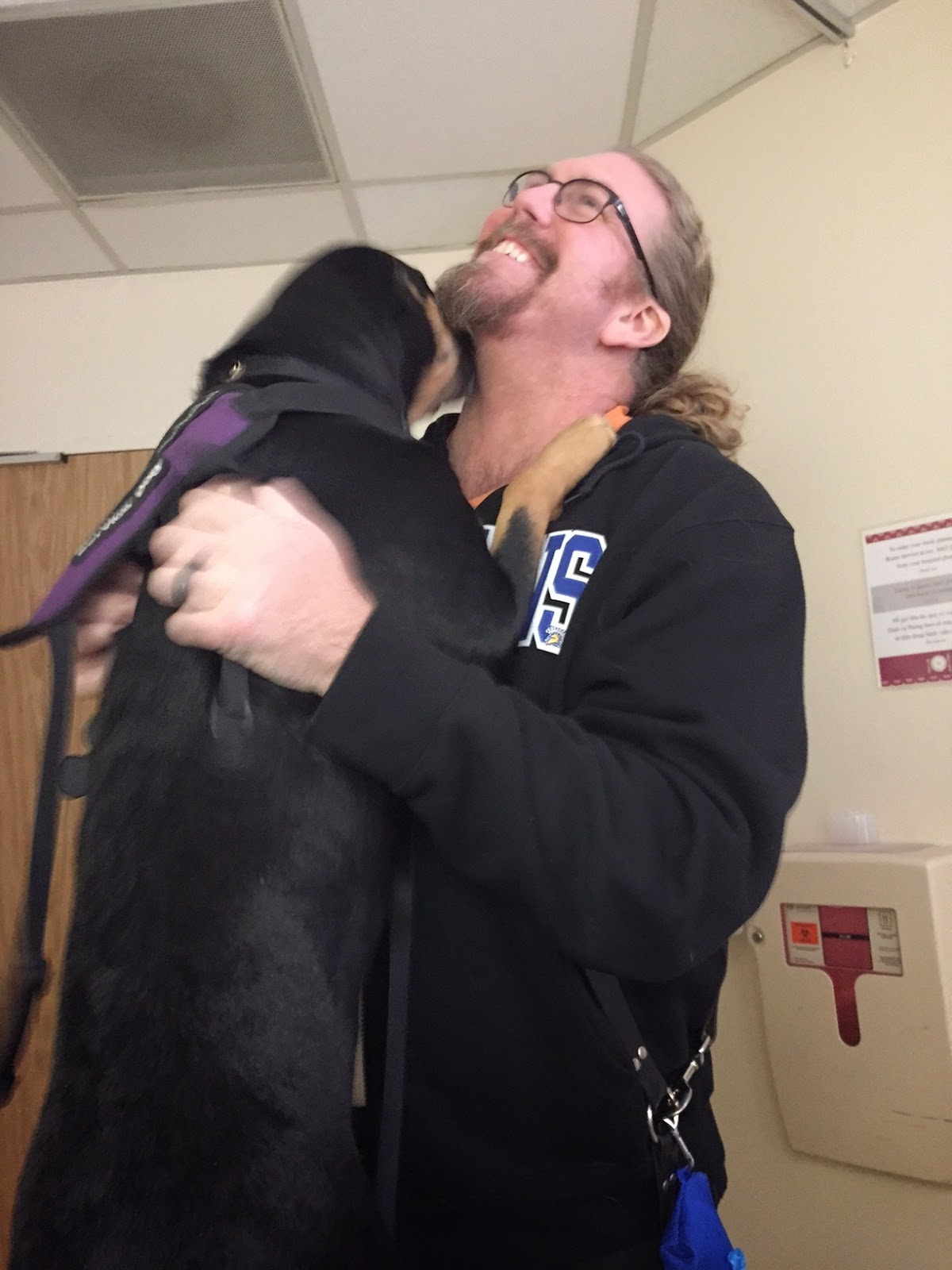
Ellie in my hospital bed: doing her job 


Ellie is overjoyed to see Daddy.

After a few days in the hospital I was released into home nursing care.  Where with the help of home nursing care I would continue IV antibiotics for another 14 days.  We have to monitor and track my vital statistics every 3 hours – making sure my temp does not go over 101.9 – which is our “go directly to the ER” number.   The temperature is also a marker of how well the antibiotics are controlling and healing of the infection.  After the first round of antibiotics we had to wait five days and then take a blood culture test.  The blood culture revealed I had a second bacterium that was more resistant now in my blood stream, which was accounting for the continuation of the fevers.  We think the CRE was introduced while I was in the hospital.  Which is not uncommon and the main reason why both my doctor and myself want to keep me out of the hospital and in home care, away from more resistant bacterias.

We started a second round of more targeted and aggressive antibiotics – the kind of antibiotics which come with side effects very similar to chemo therapy.  So I spend a lot of my waking time with my head in a bucket or holding on to my service dog to try and make the room stop spinning.  The side effects are harsh and the infection it self also has some difficult symptoms – if you have ever had a serious kidney infection or kidney stone you have some idea to the pain I have in my back. My right kidney has a 14mm abscess so it is inflamed and very unhappy. I have been through a lot of painful medical situations in the past and this one is up there in the top 5 for miserable and terrifying. 

Evening temp spikes
I am starting my third round of antibiotics and getting care from an infectious disease specialist because we are worried that the infection is hiding in other organs.  I am exhausted all the time; my body aches all over, my back hurts very much from the inflammation of my kidneys and I exist in a state of nausea.  I am also stir crazy from not being out of bed much.  I sleep a lot.  In the next week I have a large amount of tests that will need to be done to try and locate where the pockets of infection are hiding and that means multiple hospital trips and invasive procedures. All of which I am very much looking forward too with as much glee and excitement as one in my state can muster.

My support team at home is great. My husband, Jeff is doing wonderfully in helping my monitor and record my vitals and making sure I get all my meds but he is also still doing all the full-time care giving chores of helping me when I can get food and trying to cater to what things I might actually want to try and eat, which takes a lot of time and work.  
Ellie and Selah on duty : "get back in Bed MOM!"

Ellie on the job - she takes taking care of me seriously.

Ellie my Service dog is working her butt off; she is glued to my side everyday helping me.  There are so many stories to tell about how she has helped me through this (I promise to write about them when I am able).  Selah has also stepped in to be the sentry – she runs to bark and tell Jeff if I call out in pain or the alarm on my IV pump goes off. Selh Jumps of the bed and runs of to bark, "Gwen has fallen down the well come quick come quick!"

But the burden of being a caretaker to a spouse who needs this level of care is emotionally and physically draining.  It is a hard thing to go through and it is harder still to know how hard this all is on him and to understand that my illness is the reason for it.

My IV pump - an older baxter
model "the work horse":
we hang my Banana bag
(vitamins and 5% dextrose)
on one side and the
antibiotic bags on the other side.
I also have PCA that is not pictured.


I use humor to get through most hard times, in the beginning I would joke about my condition having a higher mortality rate that Ebola.  I thought it was funny . . . considering the hospital still had Ebola warning signs up at the front door stating it was certified to handle an outbreak if one should hit in small town CA this is where you come! like some odd advertisement.  I saw those signs and found them hilarious. So the Ebola joke was for me a way of wrapping my head around how serious this is, more viscerally than filling out the advanced directive forms or having a doctor exclaim they are amazed I am stil alive for the upteenth time. My little Ebola joke was a way for me to get a handle on what was going on inside my body and what I was fighting and why I had to be a good compliant patient and rest and do as I was instructed. My little joke was how I was coping with it all. 
One of my doses of "meds"
 I do this every 4 hours.

Until the day I quipped off my little Ebola Joke to a close friend and my husband turned to me with tears in his eyes and said. “please don’t say that any more, I don’t want to hear that anymore.”

“I am joking hun,” 
I replied almost dismissively, “just about the odds you know, like gallows humor”

From a still and stone expression as a single tear escaped his steely gaze he said, “I know the odds, and I don’t think it is funny.”

He is right of course, it is not funny and we both know the odds and we are still in the woods on this one. 

All of the fur babies in bed helping with the healing: Ellie, Selah, and my cat Pax.

I am told it will be some more weeks before things will turn around and I am still strong and hopeful and in my fighting spirit.  We are coping as best we can on this one and we are lucky to have some amazing friends who come by to help with the daily life maintenance stuff which becomes seemingly impossible with all that must be doing with IV tubing and medication bags and injections – thinking about sorting laundry and vacuuming floors feels like a far away luxury of health.  So we are blessed to have the support of some really lovely friends who have come to help us keep coping.  And that is what we will continue to do until we win this battle and trust me we will win this battle and walk together out of the woods, cause that is what we do.  We keep going, hand in hand like always with two funny little pups on either side of us.

All of us
That is all I can muster for now – I’ll fill in the blanks later and continue to update as things change. Until then I’ll let Sondheim take us home.

Into the woods,
Without delay,
But careful not
To lose the way.
Into the woods,
Who knows what may
Be lurking on the journey?
Into the woods
To get the thing
That makes it worth
The journeying.

Into the woods!
Into the woods!
Into the woods,
Then out of the woods,

And home before it's dark!

Thursday, September 11, 2014

Diving heals the soul and helps me feel whole again, even if just for 40 minutes . . .


We just experienced two of the most spectacular cavern dives of our lives.  We always Dive with Alfredo Duarte from Luum Ha Diving for cavern/cenote dives because they are exceptionally good dive masters and instructors and their professionalism and knowledge about the cave systems in Mexico are top notch.  Here is the link to their Face book site: https://www.facebook.com/LuumHaDiver  


We have been diving with Alfredo from Luum Ha for 5 years and experienced many cenote dives but our trip to The Pit and The Pet Cemetery were by far some of the most challenging and most beautiful we have done. 
This is a map of the whole system here - we only dove the area called the pit - it is the small squarish part in the upper right of the map -so you can see how much we did not see.

The Pit is part of the Dos Ojos cave system. Exploration of Dos Ojos began in 1987 and still continues. The surveyed extent of the cave system is 82 kilometers (51 mi) and there are 28 known sinkhole entrances, which are locally called cenotes.  Dos Ojos is one of the top three longest underwater cave systems in the world. Dos Ojos contains the deepest known cave passage in Quintana Roo with 119.1 meters (391 ft) of depth located at "The Pit" discovered in 1996 by cave explorers who came all the way from the main entrance some 1,500 meters (4,900 ft) away.  In fact the Pit is where Carlos Coste set the free diving record of 150 mt (490ft) on one breath, back in November of 2010. 


We dove in The Pit. There is a long stairway down to a small wooden platform.  This stairway is relatively new – only a few short years ago you would free jump into the water and lover your gear by rope.  Jeff and I have great difficulty with stairs, and Alfredo and the Luum Ha team are excellent with helping us with our disabilities.  They like us believe diving can be done safely for people with some disabilities and without their assistance in loading our gear down to the water we would never be able to see the beautiful places.  We gear up in the water to take the weight off Jeff’s back and my abdomen.  This is a fairly common practice of divers with our disabilities.  The reason we love diving is that once in the water; we can feel like we have the same strength and agility we had before our injuries.  Diving allows us a feeling of physical freedom from pain, and a quieting of the mind we never have outside the water.  We are lucky to have dive master in Mexico, who understands that diving is healing for the soul and body and is willing to have his team assist us in getting into the water so we can experience these amazing places.


Once in the Pit, you descend to about 120ft – the water is fresh and clear as you are descending and around 95ft you start to see the Halocline, which is much wider here than in other caves.  The halocline is where the fresh water mixes with the salt water. Salt water is denser than fresh water so when gravity forces them to mix inside the cave the water stratifies; forming layers which creating very interesting visual effects.  Most cave systems this halocline is just a few feet of layers mixing, but because of the size and depth of The Pit, the halocline goes on for many more feet creating this incredible white cloud.  As you descend into and out of the cloud there are old braches of trees reaching out of the cloud.  And it looked as if we were ascending from Mordor as we came up.  Here is a short video of El Pit: http://www.youtube.com/watch?v=ggIb4R3QtOw We are editing our video and will post it soon, but here isa fun on to give you an idea in the mean time


The formations in the large room near the entrance to the pit 


The limestone formations in the Pit are breath taking. The death of the caves means they are huge.  During the Ice Age the ocean lowered by about 350ft and this whole cave system was above the water line for hundreds of years. During this dry period humans and animals used the caves for shelter and tress and plants took root.  So the caves are filled with fossils of human and animal skeletons.  They have found a female skeleton, in a fetal position as for burial, and dated her to 12,000 years old.  The Pit has a full skeleton of a giant sloth, which is at least 8000 years old and many other bones.  All of the formations of stalagmites and stalactites in the Pit are exceptional, some are hundreds of feet tall reaching all the way down the wall and then there are the shelves with thousands of tiny needle like formations tucked into the side of the cave.  The main shaft of the cave has several tunnels branching off into other chambers. We stayed inside the main area as it took almost an hour to just explore all the incredible formations along the wall as we were ascending back slowly to the surface.  It was a beautiful slow exploration of some of the coolest formations we have seen: there was a section where is looked as if some one had melted butter and maple syrup down the side in big globs for fifty sixty feet. 

After the Pit, the tram graciously carried all of our gear to the surface as we slowly hauled our bodies back up to the van.  We always joke that it takes days for us to recover from the toll it takes on our physical bodies but the joy it gives our souls is beyond measure.  Personally I never feel more ‘alive’ than when I am diving.  Back at the van the team loaded up the gear and we had a nice lunch break before heading to the next dive at the Pet Cemetery.  
The Ladder down into to big open chamber . . . there was no possible way Jeff or I could go there so the younger couple divng with us took my phone and grabbed pictures of the inside for us.  we stood at the top and heard all the "oooohhhhs and aaaaaaahhhhs" and we very jealous.
Meet Heath and Bobbi Allen - they were the second dive team on the trip and they were both great divers and very sweet to help us take pictures in the places where Jeff and I could not walk to on land.  

 This is the large chamber at the bottom of this ladder that looked like it went down forever.


The Pet Cemetery cenote is a shallow dive with max depth of about 25 ft but most of the dive is actually around 10ft.  even though this is a shallow dive in extremely clear fresh water, don’t let that fool you into thinking this is a easy dive.  The whole path is surrounded by very fragile formation, beautiful formations which make you feel like you are gliding through a crystal palace.  This is a difficult dive because the area is tight, the formations are all very close to you and you must have excellent buoyancy control not to tough the formations or the floor.  

The floor is covered in fine silt and one tap of fin or hard kick and you will fill the whole tunnel with a giant silt cloud.  So you streamline and frog kick very lightly and keep yourself from toughing anything.  This is one of the most challenging buoyancy dives we have ever made. Gliding along in and around those formations made me feel like I was flying. 

Here is a short video of the Pet Cemetery Dive: http://www.youtube.com/watch?v=rj9U1U_5JpY

We shot our own video and are working on editing it but I thought you might enjoy these videos in the mean time.

This is the small wooden platform at the entry of the Pet Cemetery, this is shallow and ha heavy silt - so the team packed our gear here for us and we very carefully dressed in the water. Dressing in the water allows me to suit up without causing a huge amount of pain to my abdominal muscles.  I wear a full 5m suit and an abdominal binder to try and lesson that pain during the dive but dressing in the water is a huge help and the only reason I can do dives like this. Diving is an adrenaline sport, but it can be done safely for people with all kinds of disabilities and the more dive masters understand the type of assistance the diver needs the more the can help more people experience the wonder of being under the water.  

The overhead environment is close all around you, you are swimming very close to fragile formations that are thousands and thousands of years old and the floor is a instant cloud of blinding silt.  You touch the floor and you fill the clear water with a silt cloud and if you hit the wall or ceiling you are damaging history. So you get your buoyancy right and start gliding along with great care. This is what I meant by a very challenging dive.


The Pet Cemetery gets it’s name from all of the skeletons found on the floor of the system, where animals wandered in to die thousands of years ago back before the water rose inside the cave.  You can clearly see one full skeleton and several pieces of a huge jawbone plus many other bones. It is a rather exciting history lesson to know the how and why of these amazingly beautiful structures we are now blessed to experience.  There is something quite humbling in those limestone structures, something almost awe inspiring when you realize the millions of years it took to form, the synchronicity of the ice age dropping ocean levels and allowing life to flourish inside the cave and then finally the slow rise of the ocean back to modern levels. All of that had to happen, in that order over that time to allow us to behold the beauty now.  To know that those caves have only been being explored by a very small number of people since the late 1980’s makes me feel very lucky indeed to have experienced them and hold them as part of my soul.


The formations are incredible - he is an example of how the stalagmites and stalactites grow together over time to form columns - now image those columns standing 100's of feet high in the deeper caves.


 All of the bones were in the cave before the water started to rise again so that means they are all at least 8000 years old.  those are some pretty good looking 8000 year old teeth, huh?

Large jaw bone with all the teeth still intact and a partial skeleton of a deer below.


There is now a beautiful new museum on the Dos Ojos site: The Institute of Pre- History of the Americas, that has great exhibits about the ice age and how the fossils came to be all through out the cave system. Here is their Facebook site: https://www.facebook.com/pages/Instituto-de-la-Prehistoria-de-América/155086507853455

If you go to Dos Ojos now – stop at the museum.  The museum building also serves as a meetinghouse for the local Mayan community – a gathering place where they can come together and work with the government researchers.  The cave system is on Mayan land and has been part of their history and culture from the beginning so it is wonderful to see the cooperation between the local people and the researchers.  These caves have only been explored since the late 1980’s and there is so much more yet to find.  The museum will soon house a onsite lab where researchers will be working on fossil finds and the public will be allowed to watch how fossils are brought up from the water and then preserved, tested and replicas are returned to their exact locations. This is a one of kind collaboration with the local Mayan population working to preserve the rich history of this land and the peple and animals who have been inhabiting it for thousands of years.


This is a reproduction of the site where the skeleton of the female's skeleton pictured above - the bones are arranged in a fetal position as if she had been wrapped for burial. the bones were placed before the water rose and that is why they stayed so close together, the skull had an air pocket inside and as the water rose it lifted and turned allow the air to escape and that is why is rolled off to the side slightly when it return to the silt after the water rose above the bones.  To date they have found the oldest fully intact skeleton in the new world - a woman they named Naia and then have found another young man dated about 10,000 years old here in the cave system.  This cave system is one of the third largest in the world and still not fully explored so it is exciting to imagine how many more finds there could be in the waters down there.

They did a reconstruction on the skeleton face and determined this is what she would have looked like. She was around 45 years of age but because of the difficulty of her life she would have appeared much older by our modern standards. these people all used their teeth as their main tools, so their skulls and jaw bones and teeth show a lot of wear and infection.

 Diving for both Jeff and I deeply important to us; not just because we are both disabled with medical conditions which can make life outside the water difficult, but because of how being under the water in the full glory of nature can heal our souls.  I spend a lot of time in and out of hospitals and on Picc lines having having blood transfusions and other medical treatments which make life not so much fun.  so When I am free from those treatment even just for a month or two we try and get underwater again. We run off to feel the ocean around us, see the incredible formations in the cenotes and be with all of the abundant like on the reefs.  Those few precious moments under the water refuel our souls, and even though it may take our bodies a while to recover every second we get under the big blue is worth every moment of recovery outside.  I know my diving days are limited as my condition progresses, but until then, I will fight like hell to keep getting back there.

This is why we are working to help other disabled veterans and civilians learn to dive. SCUBA, and being in the water allows us to feel whole again and move with the agility we had before our injuries or illnesses.  Sharing the gift of diving with other disabled veterans is a life long dream so they too can feel whole again in the big blue.